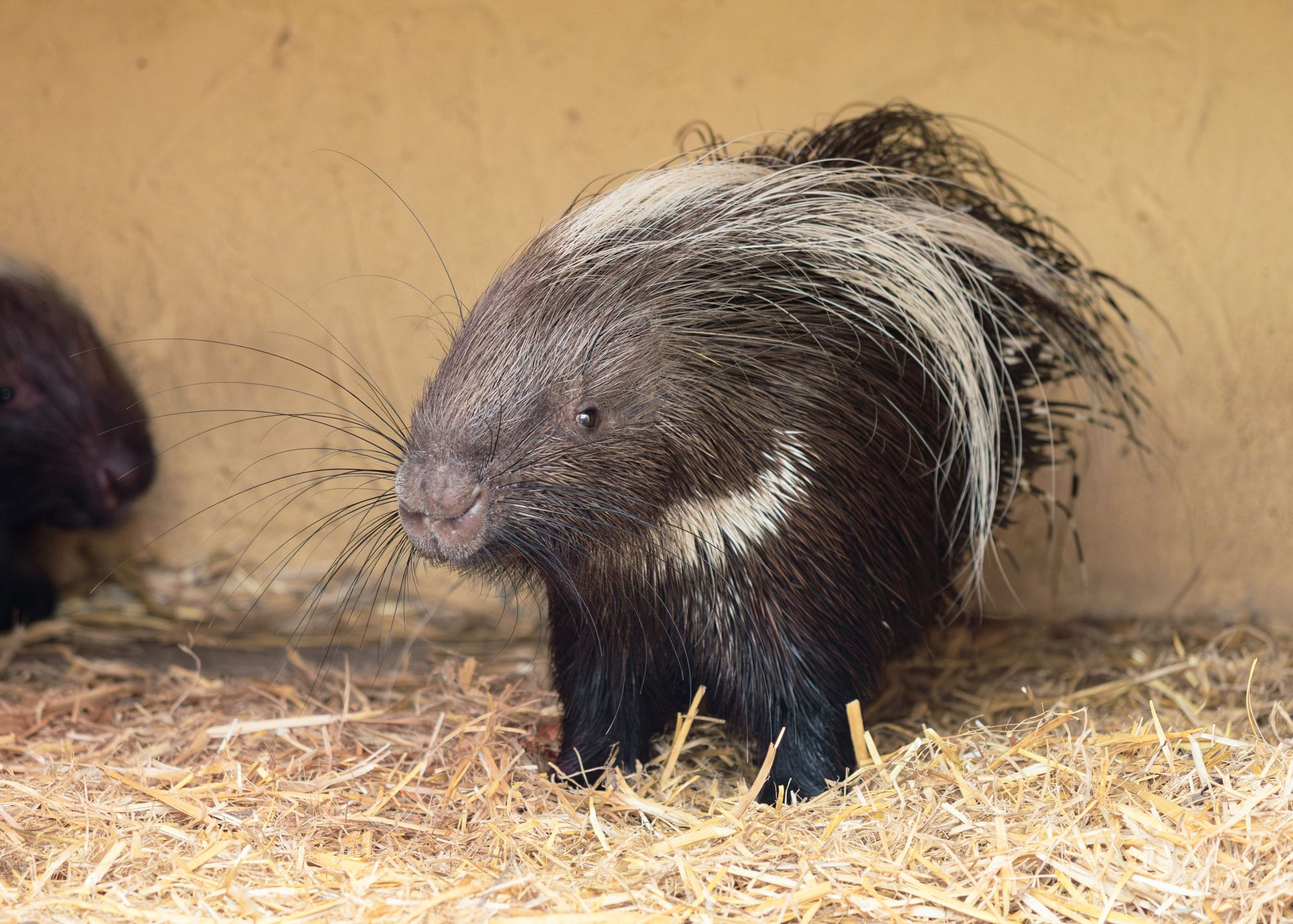
Cape porcupine
Newquay Zoo is home to two male Cape porcupines, three-year-old brothers Pins and Needles.
The pair can be found in the zoo's Wonders of the Wild area, where visitors can discover more about these fascinating African rodents and their remarkable defensive adaptations.
Class:
Mammalia
Order:
Rodentia
Family:
Hystricidae
About the Cape porcupine
The Cape porcupine, also known as the South African porcupine, is one of the largest rodents in Africa. Found across southern and central Africa, these distinctive mammals inhabit savannas, grasslands, rocky hillsides, and open woodlands. Cape porcupines are primarily herbivores, feeding on roots, bulbs, tubers, bark, and fallen fruit, using their strong teeth and powerful claws to dig for food.
Best known for their impressive covering of sharp quills, Cape porcupines use these modified hairs to defend themselves against predators. When threatened, they raise their quills, rattle the hollow quills on their tails, and may charge backwards towards danger. Mostly nocturnal, Cape porcupines spend their days resting in burrows or rocky shelters and are generally social animals, often living in family groups.
Conservation
Cape porcupines are widespread across southern and central Africa and are currently classified as Least Concern on the IUCN Red List. Although their populations are generally considered stable, they face local threats from habitat loss, road collisions, and persecution by farmers, as they sometimes feed on cultivated crops.
Protecting natural habitats across countries such as South Africa, Namibia, and Botswana helps support healthy populations of Cape porcupines and other native wildlife.